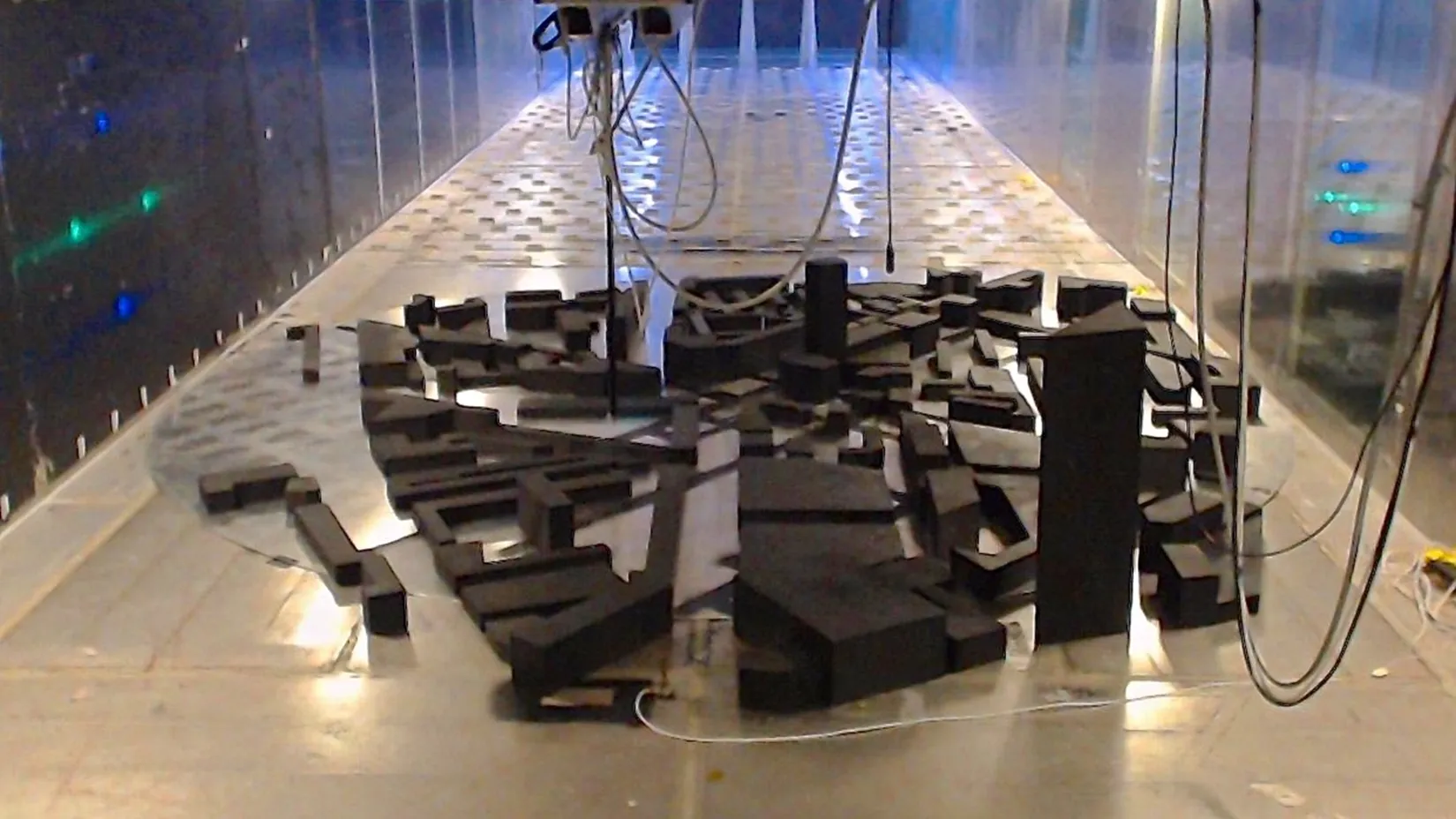
The fluid mechanics of the urban environment.
Studying the turbulent transport of momentum, heat and pollutants across every scale of the city — inside and between buildings, through the urban canopy, and up into the atmospheric boundary layer — and sharing the meetings, data and models behind the science.
Five challenge areas
Research scopeSpanning fundamental to applied research — experimental, numerical and theoretical — organised around five shared challenges, revised in 2025 to reflect net zero, resilience and the rise of data-driven methods. Read more →
 C1
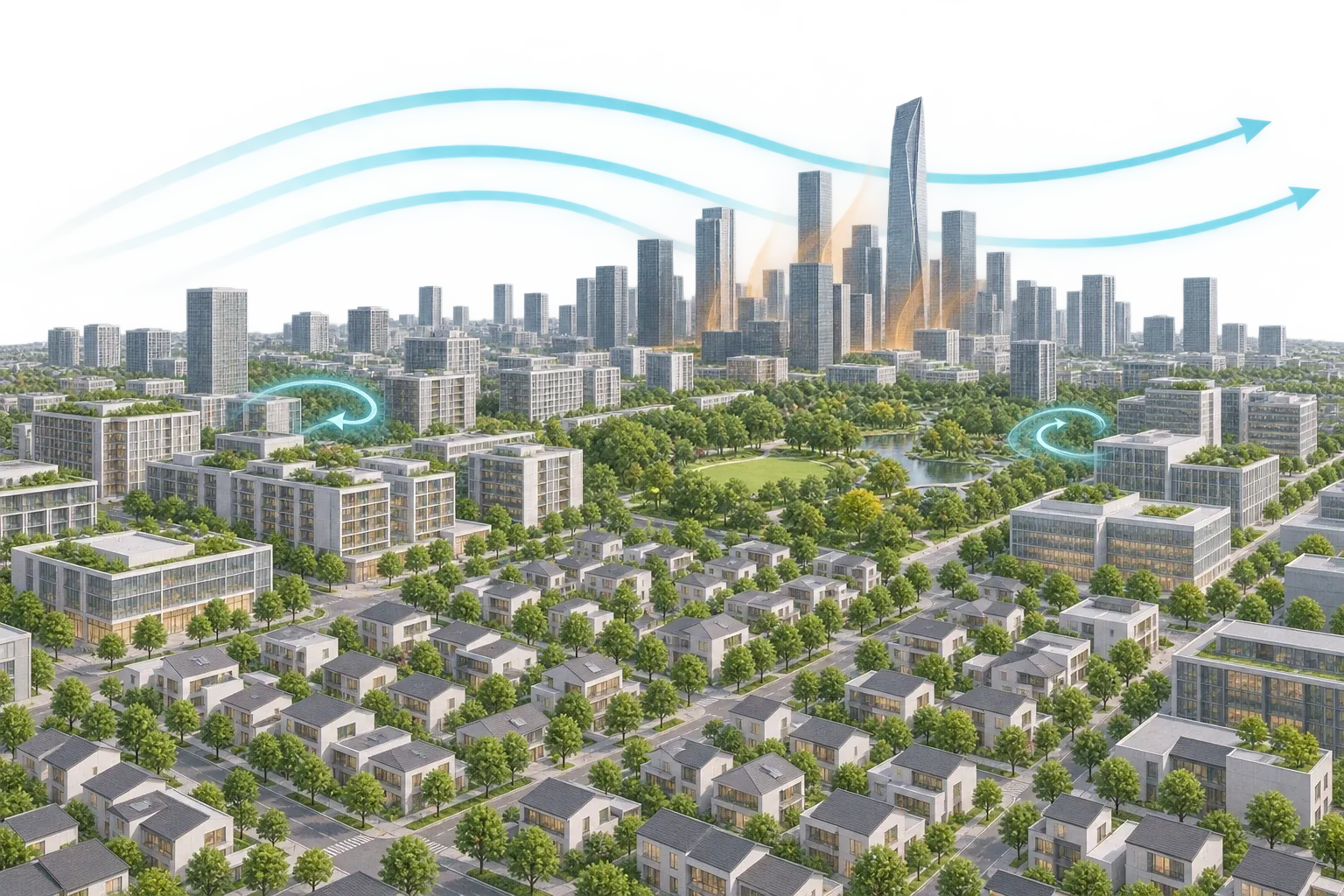
Urban Flow Regimes & Multi-Scale Coupling
How turbulence, canopy heterogeneity and stratification interact across scales — from the atmospheric boundary layer down to street and indoor flow.
 C2
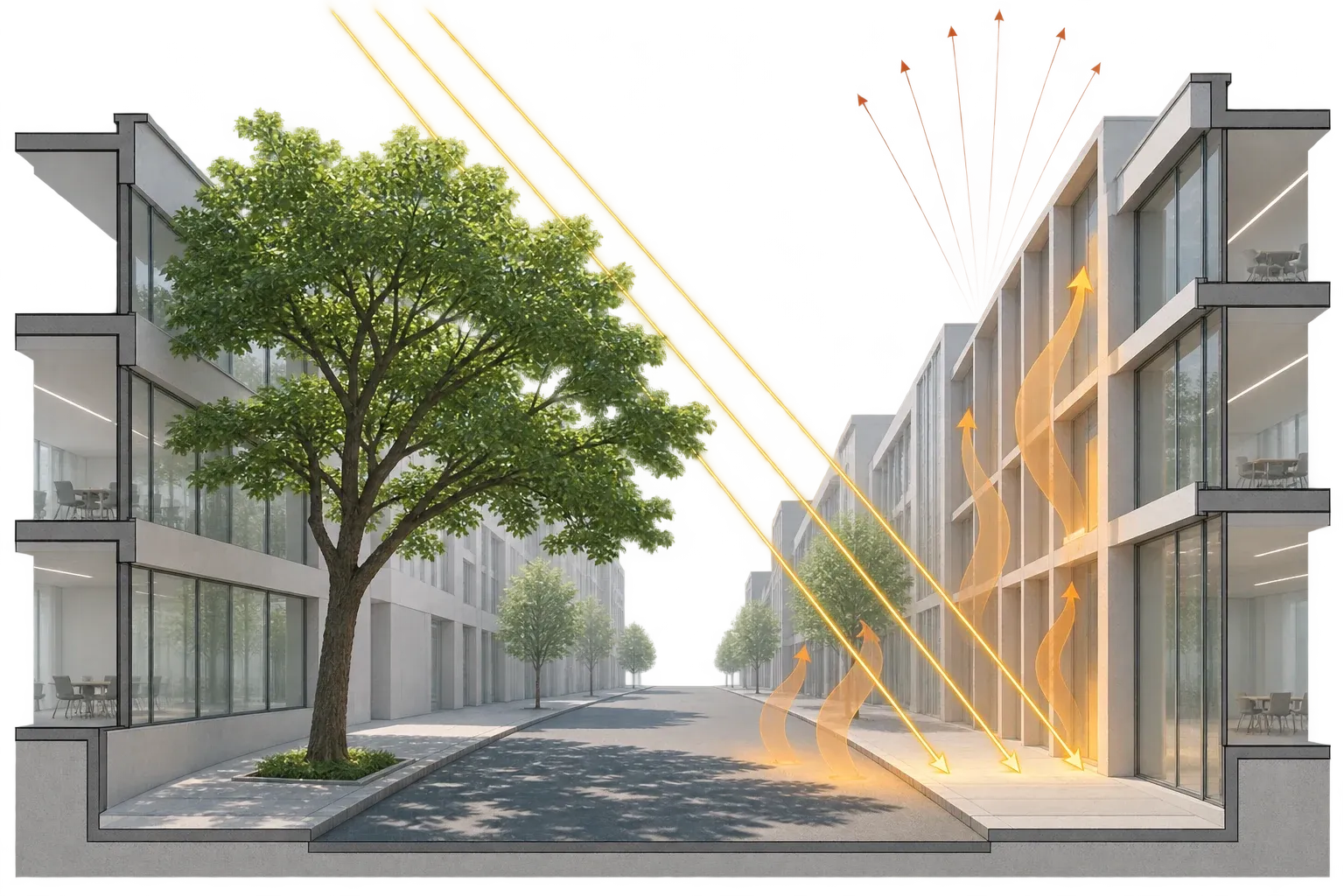
Urban Energy, Heat & Buoyancy Interactions
How surface energy balance, radiation and urban form drive buoyancy, turbulence and thermal comfort — key to heat-resilient, net-zero cities.
 C3
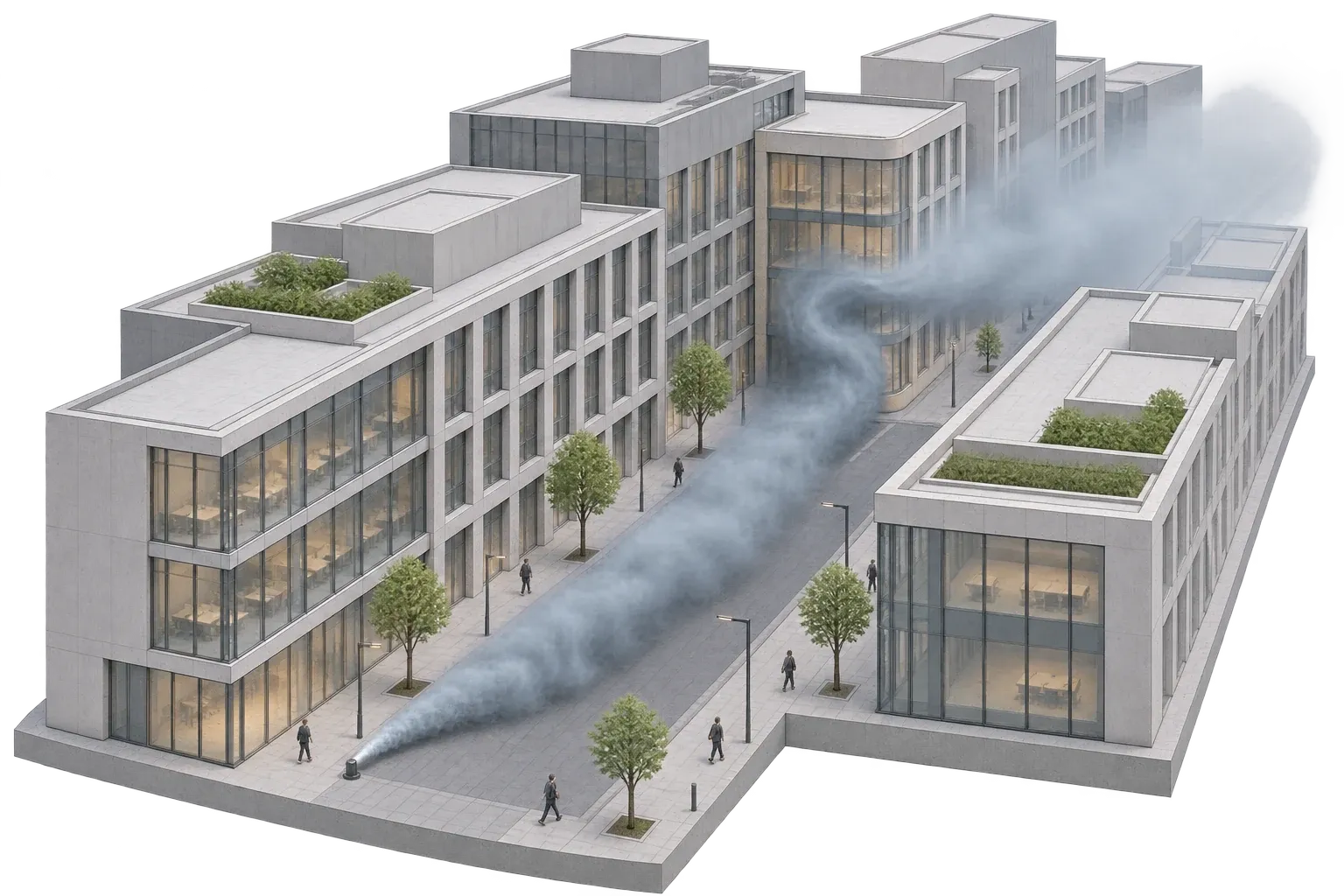
Scalar Transport, Dispersion & Exposure
How urban morphology controls passive and reactive scalar transport — underpinning air-quality management and exposure assessment.
 C4
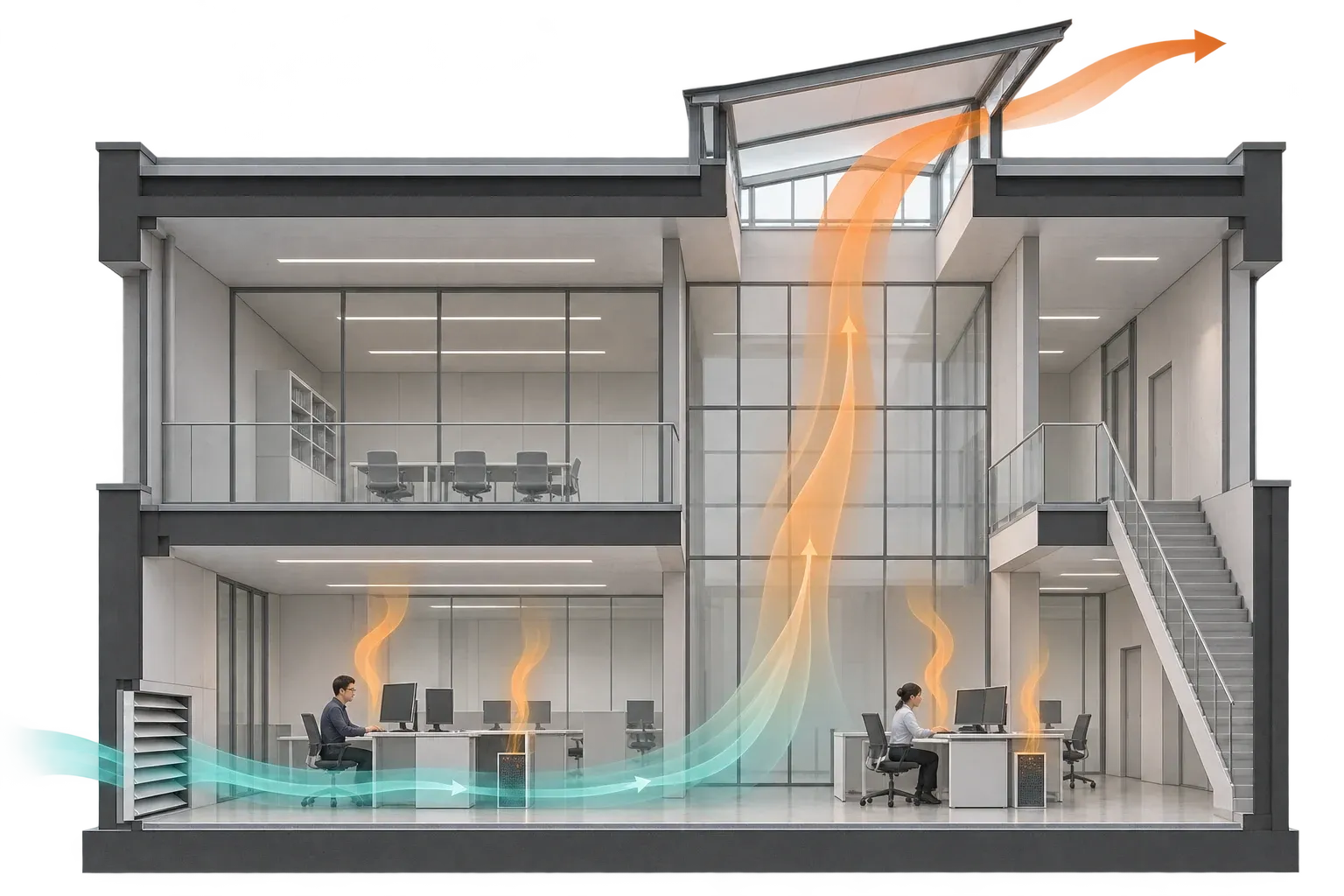
Building Ventilation & Indoor–Outdoor Exchange
Turbulent exchange across façades between indoor and outdoor air — for ventilation efficiency, pollutant ingress and low-energy design.
 C5
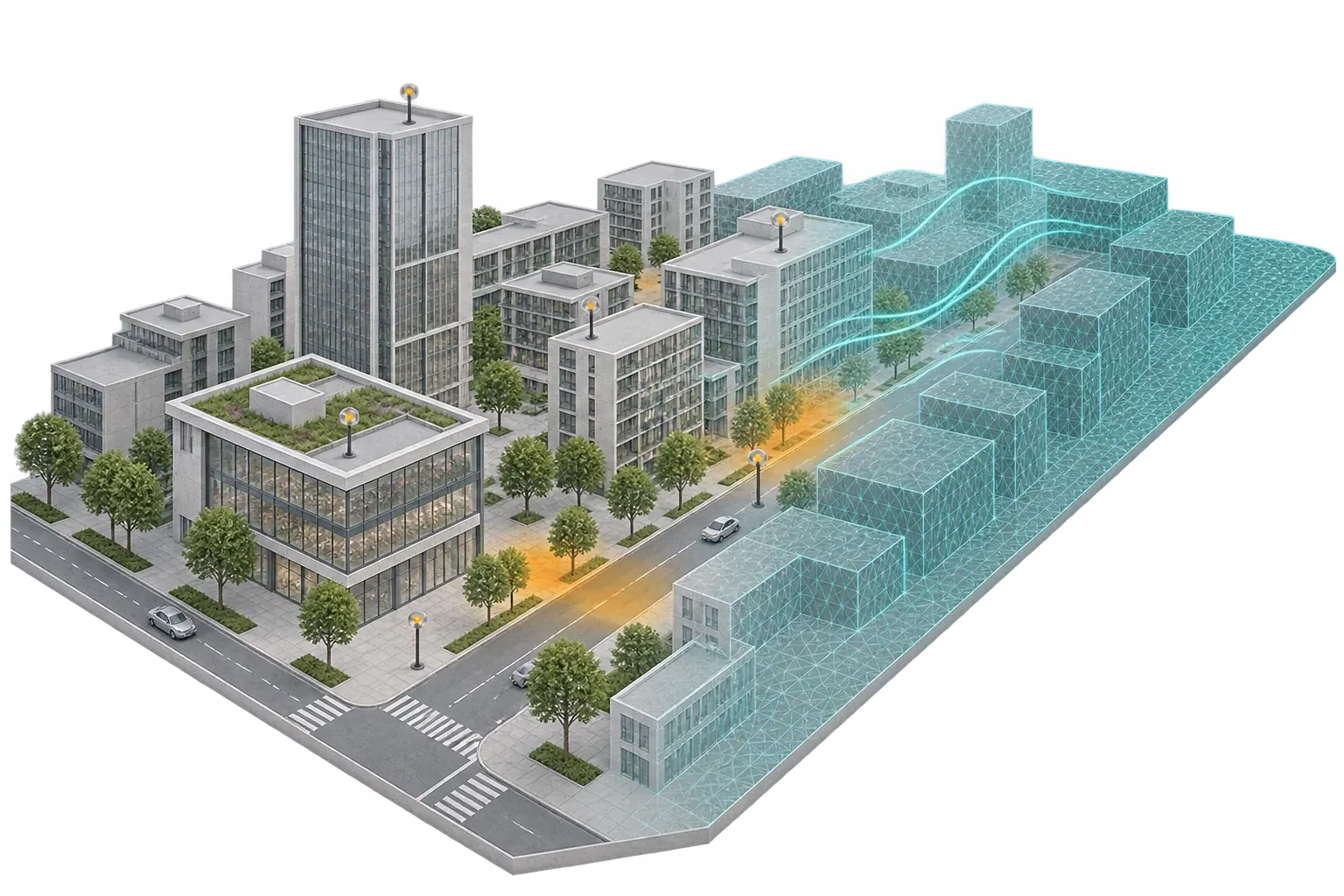
Data, Models & Digital Twins for Coupled Urban Systems
Physics-based and data-driven frameworks linking observation, simulation and AI — reduced-order models and digital twins for coupled urban systems.
Meetings & presentations
Community & outputsThe group meets once or twice a year — typically around 50 participants across universities, industry and government. Talks and slides from each meeting are archived here as a lasting record of the field.
14th UFM Meeting
Urban heterogeneity
Urban fluid mechanics in a changing climate
Explore the data portal
Data portalField, laboratory and simulation data on urban flow, plus codes, geometries and benchmark cases — searchable, filterable and mapped. 293 resources, refreshed monthly from Zenodo and CEDA.
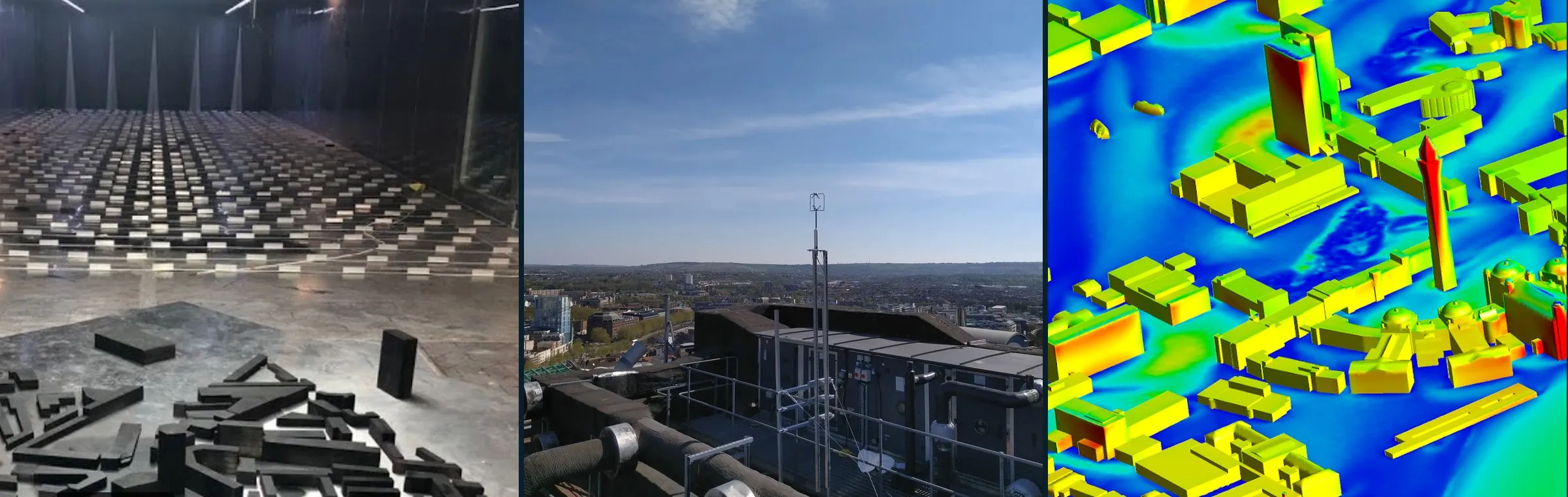 LabFieldSimulation
| Resource | Type | Published |
|---|---|---|
| urbisphere radiation measurements: Berlin | Field | Nov 2026 |
| Hourly meteorological dataset from a 40-station network on the NUS campus, Singapore (2025) | Field | Nov 2026 |
| Data-centre heat emissions and local urban warming in California | Simulation | Nov 2026 |
| PTSWO: fast surrogate for near-surface winds over urban surfaces and terrain | Simulation | Nov 2026 |
| Resistance-network model of near-surface winds and ventilation in Yixing | Tools & geometry | Nov 2026 |
An independent, open community
About the groupUrban Fluid Mechanics began as a Special Interest Group of the UK Fluids Network, funded by EPSRC. That grant has since concluded — but the community it created carries on independently. We remain open to all: universities, industry and government, in the UK and beyond. There is no membership fee; anyone working on the fluid mechanics of cities is welcome to join the mailing list, come to a meeting, and add data, codes and benchmarks to the portal.
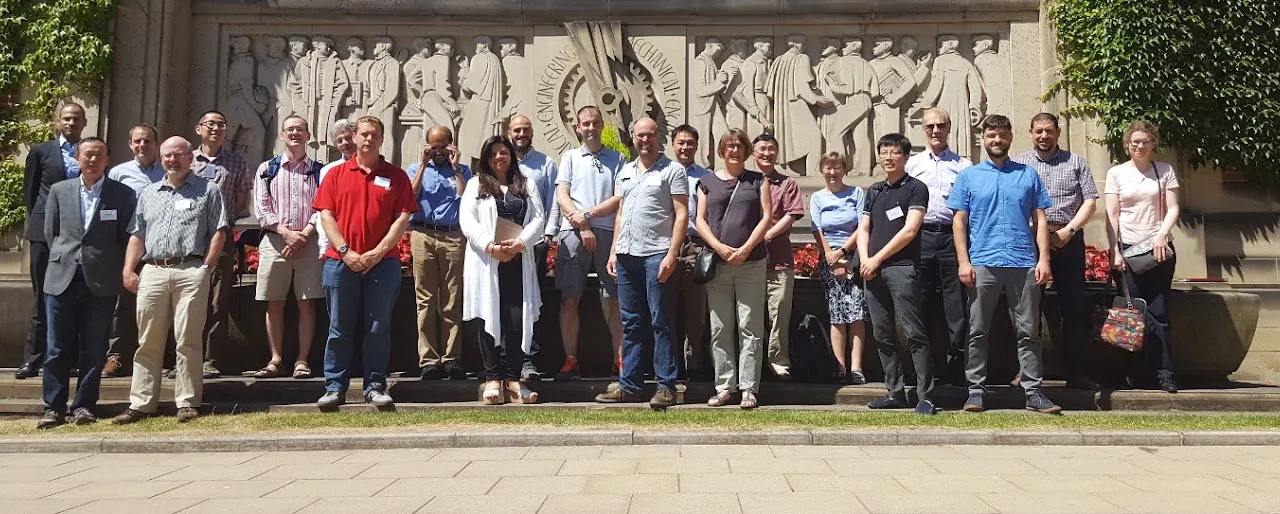 The group at the University of Birmingham, July 2018