Next meeting14th UFM Meeting · 23 Mar 2027 · BristolSave the date →
C1

Urban Flow Regimes & Multi-Scale Coupling

Understanding how turbulent structures, canopy heterogeneity and stratification interact across scales: from the atmospheric boundary layer to neighbourhood scales, street scales, all the way down to indoor environments.

This work underpins parameterisations for urban LES, mesoscale coupling and reduced-order models.

Understanding these regimes provides the physics base for predicting energy and momentum exchanges, improving urban climate modelling, and supporting resilient infrastructure and planning decisions. It also informs pedestrian wind and comfort, as well as the emerging application of unmanned aerial vehicles.
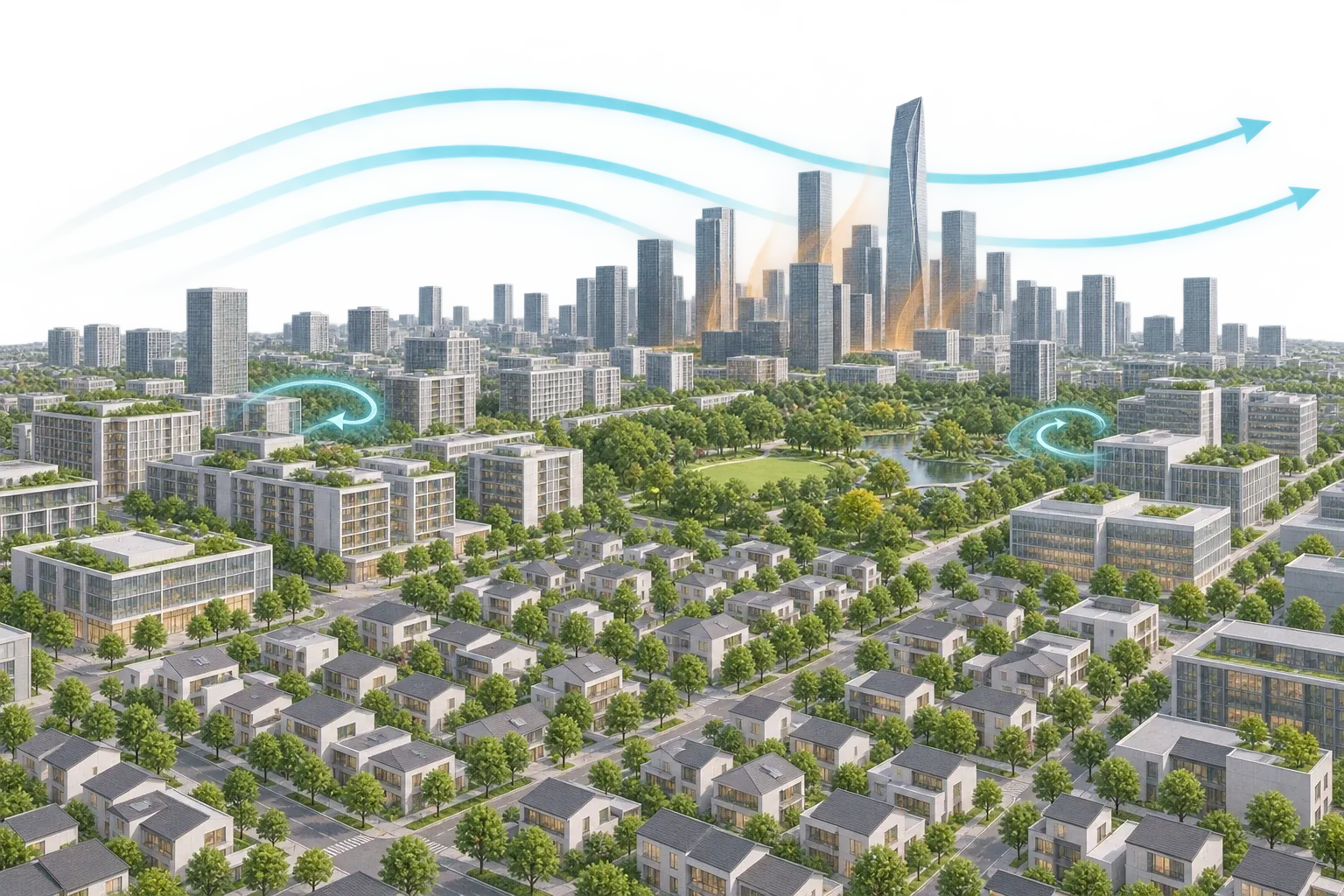
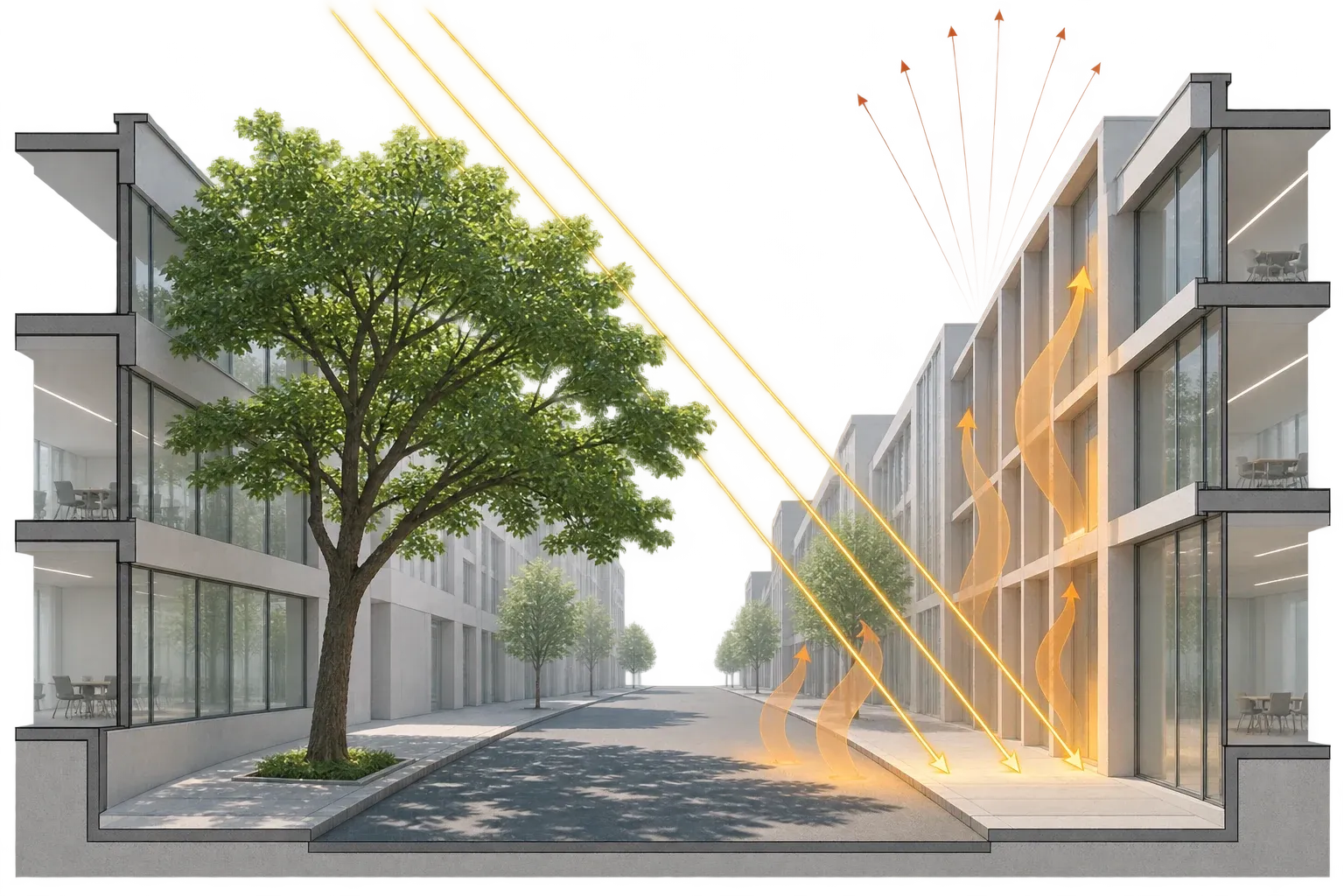
Illustration of wind passing over a city skyline, with recirculating eddies among lower buildings and parks
Flow across scales: from the boundary layer over the skyline down to eddies between buildings.
C2

Urban Energy, Heat & Buoyancy Interactions

How the surface energy balance, radiation and buoyancy influence turbulence and stratification within the urban canopy.

How urban form — including vegetation and materiality — influences flow, heat transfer and comfort in cities.

These insights enable better thermal-comfort modelling, passive-cooling design, and heat-resilient urban form — essential for net-zero adaptation in a warming climate.

Cross-section of a street canyon with sunlight striking a facade, heat rising from warm surfaces and a tree shading the other side
Radiation, heating and buoyancy in a street canyon, and the shading role of trees.
C3

Scalar Transport, Dispersion & Exposure

How urban morphology controls the transport and transformation of passive and reactive scalars.

Fundamental work on dispersion mechanisms and Lagrangian statistics informs model development across scales.

Applications include air-quality management, exposure assessment, and the design of healthier urban spaces consistent with sustainability and wellbeing goals.

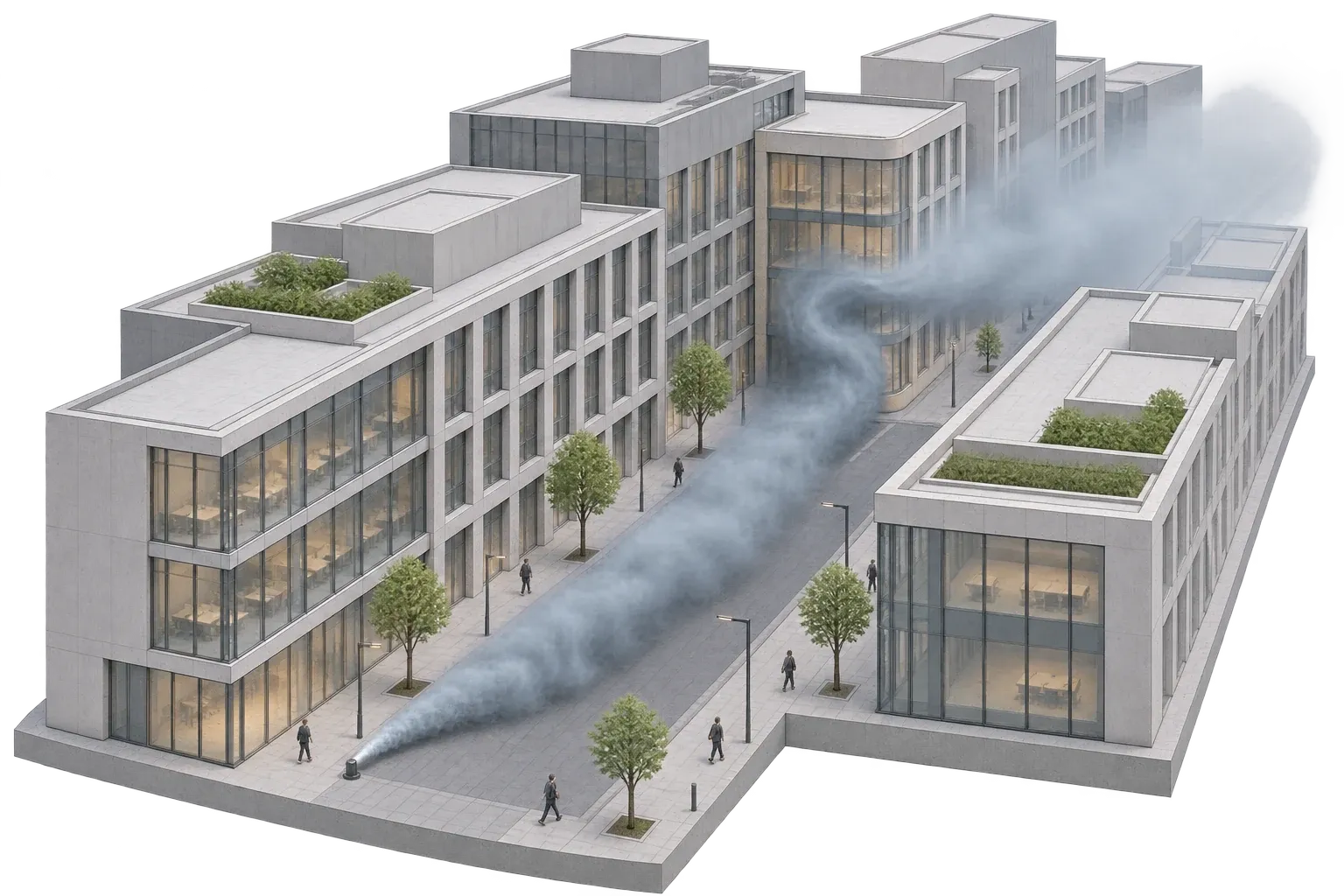
Illustration of a pollutant plume released at street level spreading along a street between office buildings
A pollutant plume carried and mixed along a street.
C4

Building Ventilation & Indoor–Outdoor Exchange

Building ventilation and indoor–outdoor exchange involve complex turbulent interactions between atmospheric flow, building geometry and pressure-driven transport across façades.

Understanding these mechanisms underpins accurate prediction of ventilation efficiency, pollutant ingress and heat transfer.

This is essential for supporting low-energy building design, improved indoor air quality, and resilience to heat and pollution in future sustainable cities.

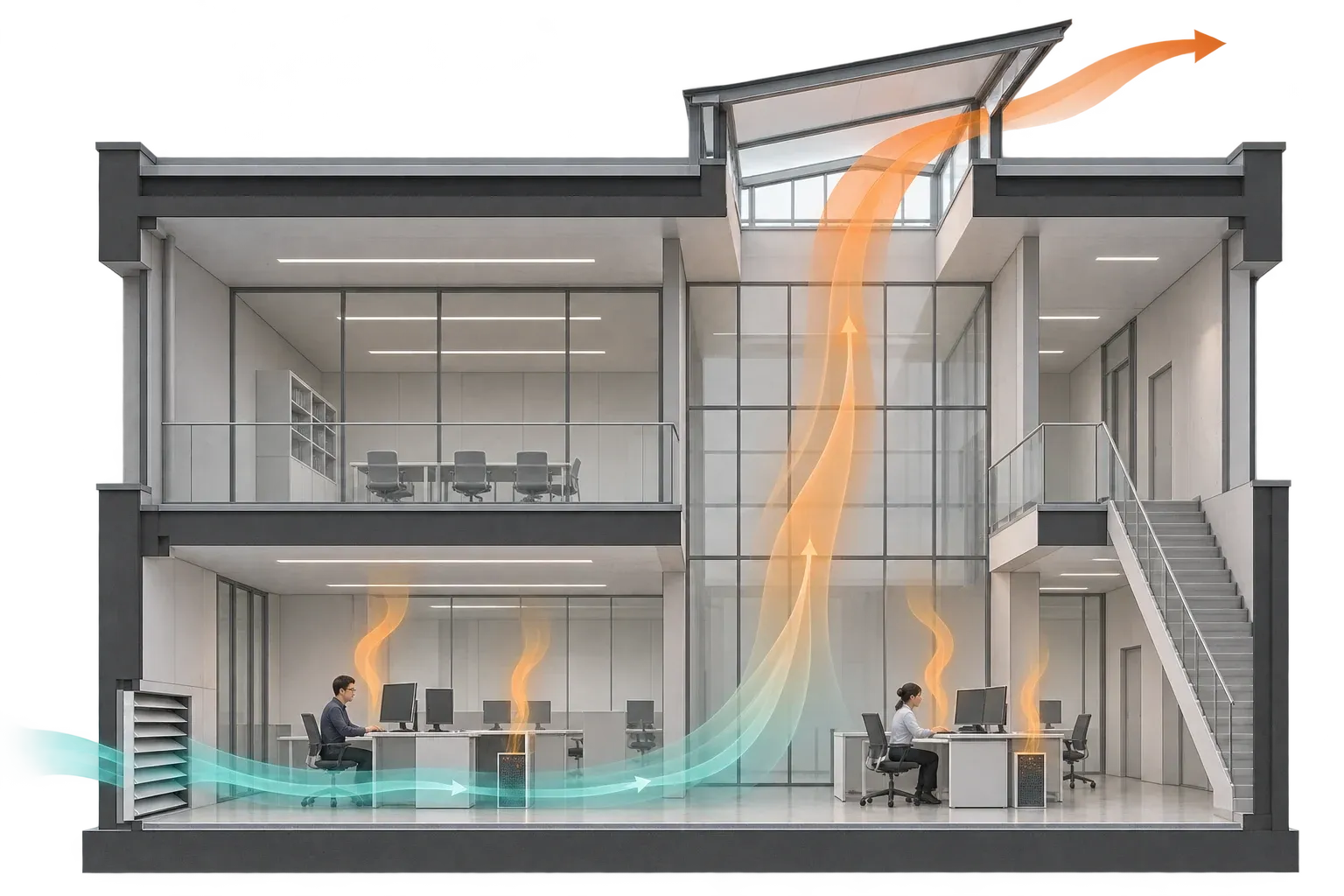
Cross-section of an office building with cool air entering through a louvre and warm air rising through an atrium to a roof vent
Buoyancy-driven ventilation: outdoor air drawn in at low level, heat leaving through the roof.
C5

Data, Models & Digital Twins for Coupled Urban Systems

A rapidly developing area is interoperable, physics-based and data-driven frameworks that connect observation, simulation and AI.

High-fidelity simulations and field data support reduced-order models and digital twins that resolve essential turbulent processes.

These tools enable evidence-based policy, sustainable urban planning, and real-time management of heat, air quality and energy.

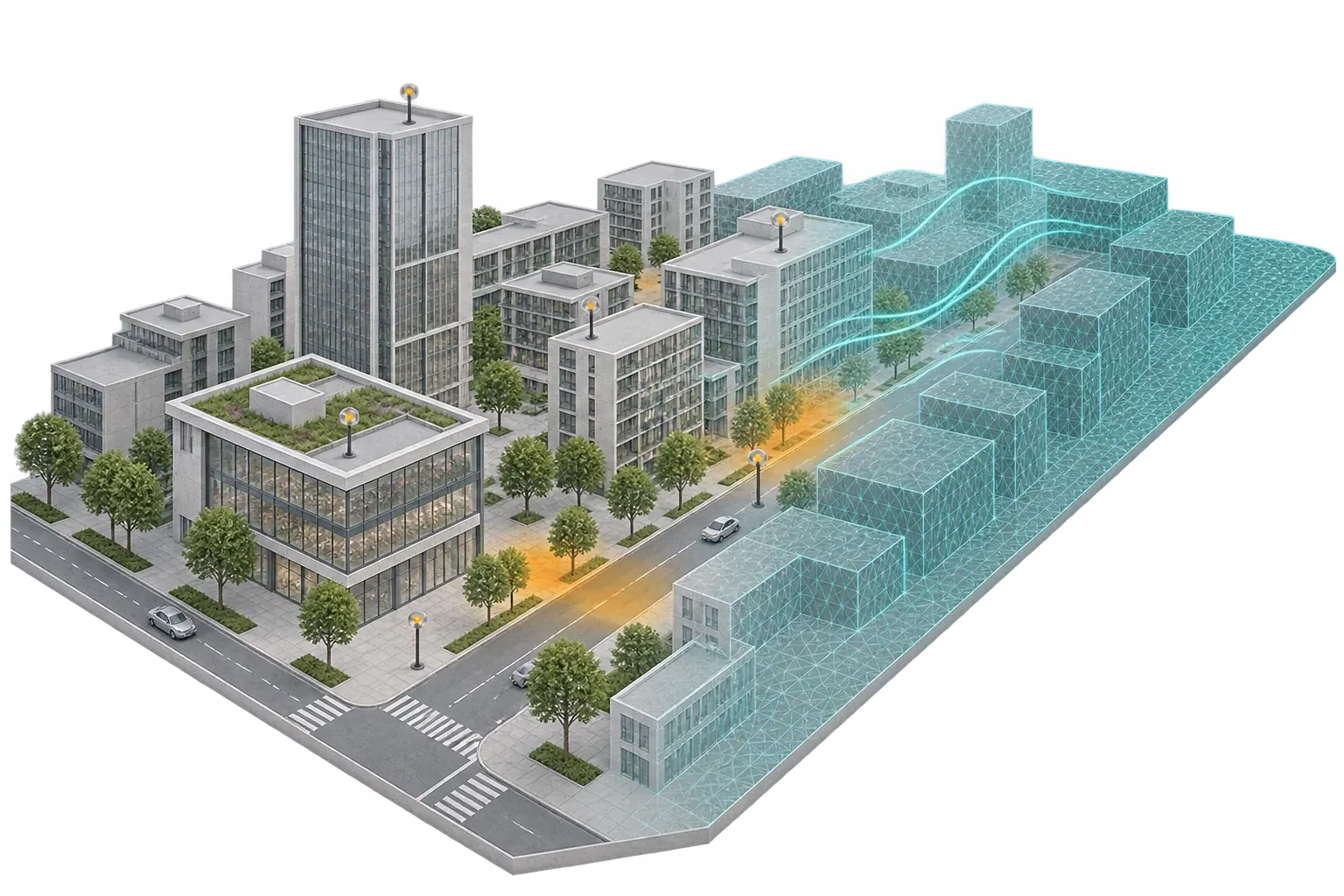
A city block that turns from a realistic rendering into a meshed digital model with flow lines
From the real city to its digital twin: geometry, mesh and simulated flow.